From eroded hills to pasture: Frederick County farm shows decades of conservation
A tour near Woodsboro highlighted rotational grazing, stream protection and tree planting, along with the costs and challenges of changing farming practices.
HERE'S WHAT WE KNOW
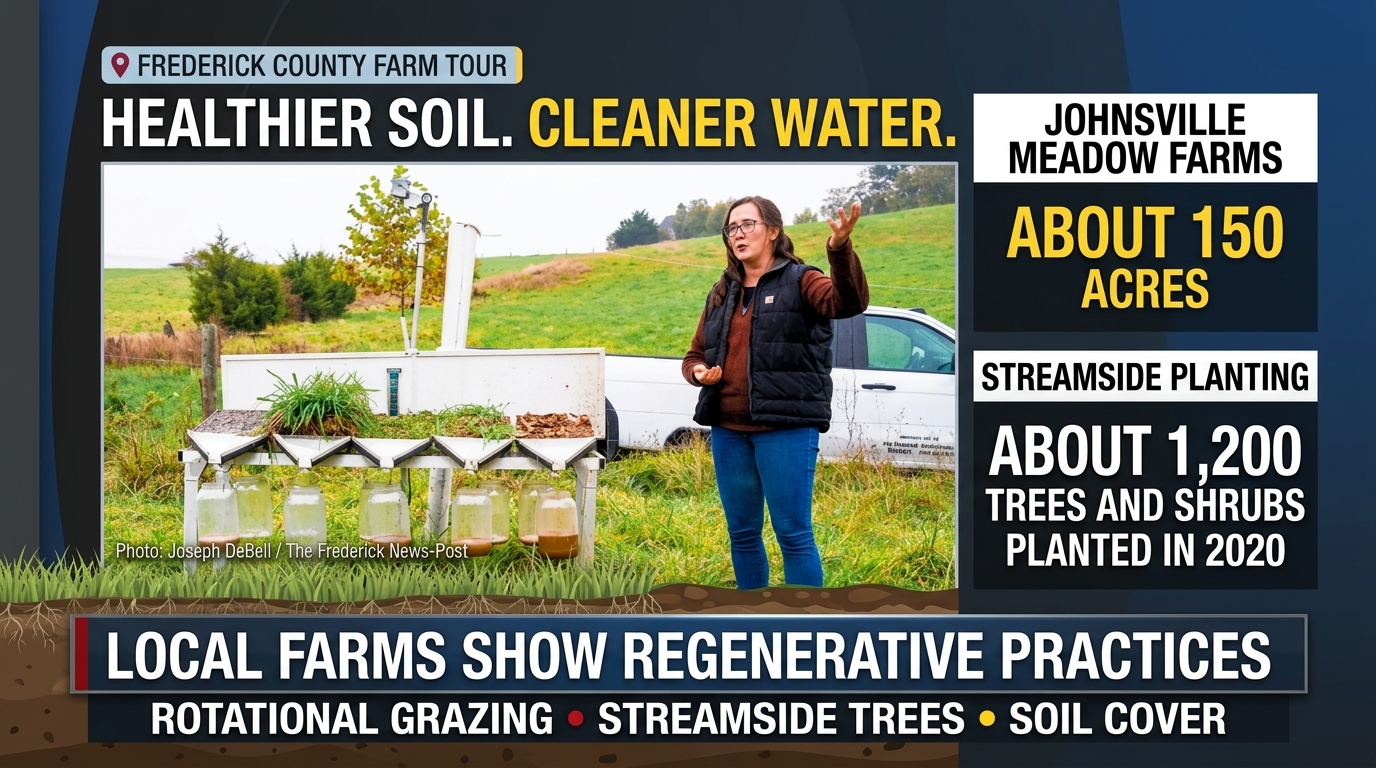
The tour visited Moon Valley Farm and Johnsville Meadow Farms near Woodsboro on Thursday. Johnsville Meadow Farms uses rotational grazing, livestock exclusion from waterways and streamside tree planting. Future orchards, gardens, a possible farm stand and silvopasture are family plans, not completed additions.
The gullies on Steve Derrenbacher’s farm still show where decades of plowing left soil exposed to erosion. Much of that land is now permanent pasture, part of a transformation that visitors explored during a Frederick County farm tour Thursday.
The Chesapeake Bay Foundation and Mobilize Frederick organized the tour, which began at Moon Valley Farm in Woodsboro and continued to Johnsville Meadow Farms, The Frederick News-Post reports.
Derrenbacher said about 85% of his family’s property was once plowed for crops. After he and his wife, Ruth Ann, took over in the early 1990s, they began shifting it to permanent pasture. The farm now covers approximately 150 acres, including 120 acres available for grazing.
The family rotates livestock among smaller pasture sections so plants have time to recover. They also began fencing cattle away from Israel Creek about 25 years ago and worked with conservation organizations to install watering systems and expand streamside plantings.
In 2020, roughly 60 volunteers helped plant about 1,200 trees and shrubs along a tributary.
During the tour, a rainfall simulator demonstrated differences in how water moved through soil under conventional tillage, cover crops and pasture. University of Maryland forage specialist Amanda Grev explained how dense vegetation can retain water around roots and reduce runoff.
Other speakers discussed habitat for bees, American kestrels and barn owls. The emphasis was on how farming decisions affect the surrounding landscape as well as production.
Changing practices can be difficult. Chesapeake Bay Foundation scientist Rob Schnabel identified education, peer pressure and debt as obstacles. USDA conservationist Hans Kefauver said financial assistance can reduce the risk of trying unfamiliar approaches.
Derrenbacher said his own system saves money by limiting hay purchases and avoiding commercial fertilizers and herbicides. The report does not provide an independent cost comparison.
The next generation is making plans, too. His son Perry hopes to return after retiring from the Coast Guard in about five years. Perry and his wife, Sam, described possible orchards, gardens, wildlife corridors, a farm stand and silvopasture, which combines trees with grazing livestock.
Those additions remain plans. The changes already visible on the farm reflect more than three decades of work.
WHAT IT MEANS
The tour offered a local example of how farm management can support soil, water and wildlife goals. It also highlighted practical barriers, including financing and the time needed to change established practices.
Want more Frederick updates like this?
Get local alerts, event reminders, restaurant openings, sports news, giveaways, live show updates, and community stories from Everything Frederick. Want to talk about what’s happening? Join the Frederick Connect community too.