Who Can Ask to Change Frederick’s Zoning Rules? Council Proposal Would Limit Applications
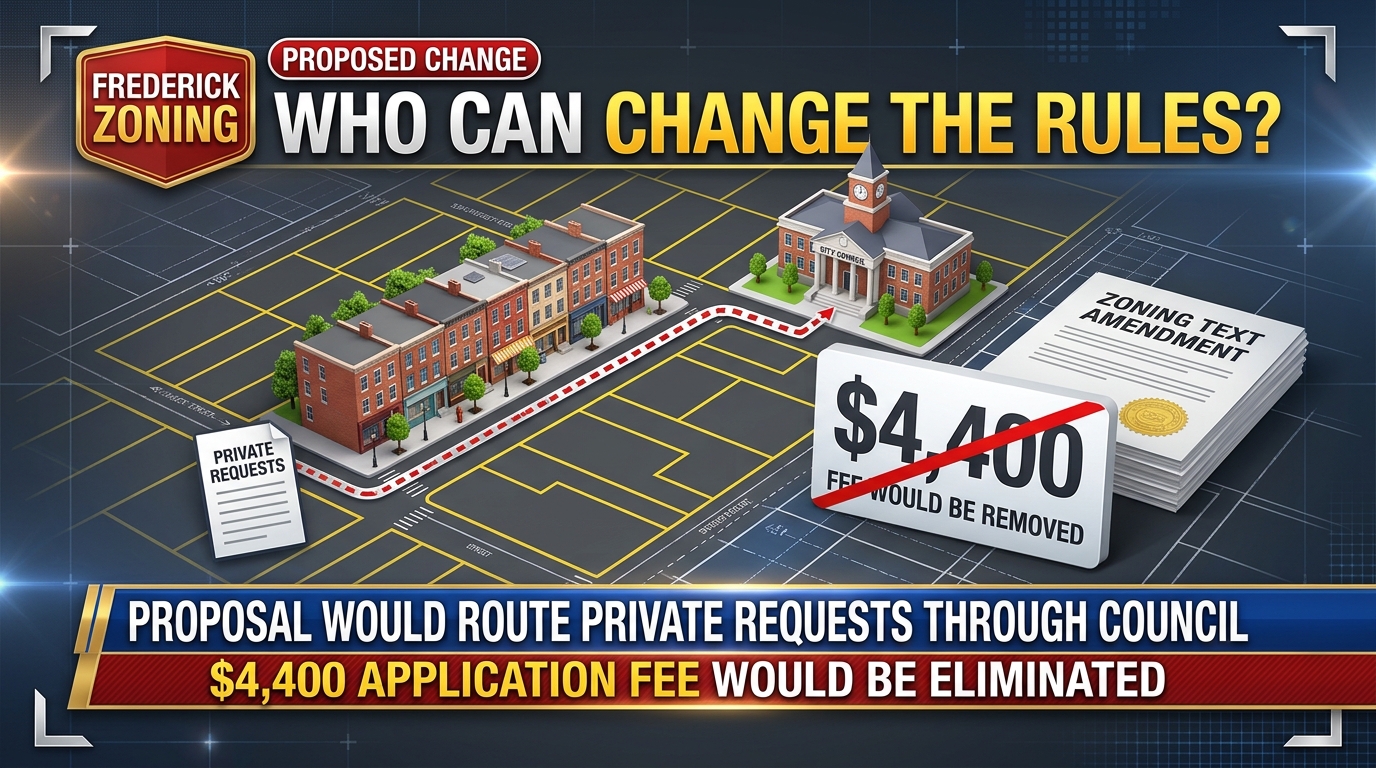
Díaz and Brehm propose ending direct private applications and the $4,400 fee, with residents and developers instead taking requests to council members.
HERE'S WHAT WE KNOW
The proposal would end direct private applications for zoning text amendments and remove the $4,400 fee. Residents and developers would instead seek a council member’s support; council discussion would not itself be an approval vote. Supporters cite access and coordinated planning. Industry representatives raise concerns about delays and the value of privately funded amendments.
Frederick residents and developers would have to take proposed changes to the city’s land management code through elected representatives under a policy drafted by City Council President César Díaz and Council Member Peter Brehm.
The proposal would reserve formal zoning text-amendment applications for city officials and planning staff and eliminate the $4,400 application fee now charged to residents or landowners, according to The Frederick News-Post. It was discussed at a council work session; the supplied report does not describe a final vote adopting it.
Text amendments change the written rules governing land use. The debate centers on who may initiate those changes, particularly when a private applicant seeks language that would benefit a particular development.
Brehm said residents had raised concerns about project-specific revisions being considered without a broader assessment of the city’s needs. A proposed amendment allowing data centers is among the changes that have drawn attention.
Under the proposal, private parties would bring their ideas to council members, who would decide whether to advance them. Council members would present applications to their colleagues for discussion before proceeding, but Díaz said that step would not require a council approval vote. Planning staff would also notify the council about amendments they submit.
Council Member Sarah Hempel Irani acknowledged that the current fee can put the process beyond the reach of ordinary residents. She asked whether a broader review of the code could reduce the need for individual amendments. Díaz said he hoped it would, while noting that laws still need updates as circumstances change.
Representatives of the development industry questioned whether the new approach could slow useful changes.
Attorney Lisa Graditor, whose firm is working with Trammell Crow on its data center amendment, cited earlier privately initiated changes that helped make affordable housing at The Heights on Himes and an office-building conversion for Monocacy Valley Montessori School possible. She argued that private applicants pay for legal drafting and supporting studies that otherwise could require city resources.
Danielle Adams of the Frederick County Building Industry Association warned that additional delays could cause projects to miss changing market opportunities. Brehm said he did not expect the initial review by a council member to add substantial time.
The proposal leaves a central tradeoff for the council to weigh: eliminating a financial barrier while making an elected official’s willingness to advance an idea the route into the formal process.
WHAT IT MEANS
Removing the fee could make it easier for residents to bring ideas forward, but it would also replace a direct filing option with a process dependent on an official choosing to act. The report describes a proposed procedural change, not an adopted ban on public participation or a decision on the data center amendment.
Want more Frederick updates like this?
Get local alerts, event reminders, restaurant openings, sports news, giveaways, live show updates, and community stories from Everything Frederick. Want to talk about what’s happening? Join the Frederick Connect community too.