

Frederick approves 11 historic markers recognizing sites where enslaved people lived and worked
The Historic Preservation Commission approved the design and locations of 11 Sites of Enslavement markers, while allowing some placement details to continue evolving before installation.
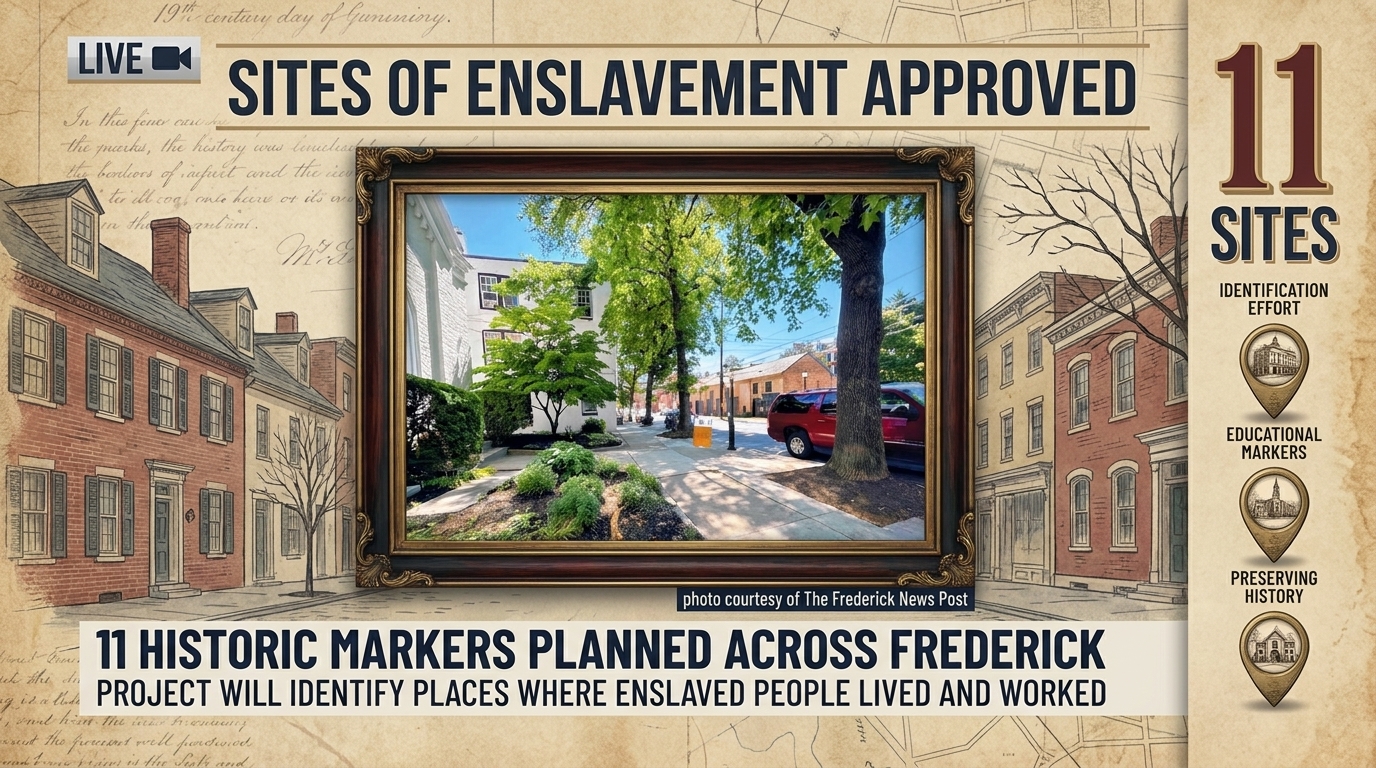
HERE'S WHAT WE KNOW
Frederick plans to install 11 Sites of Enslavement markers. The markers identify places where enslaved people lived and worked in the city. The Historic Preservation Commission approved the project 5-1. One disputed location involves the McPherson Mansion site. The proposed marker would stand near Frederick Presbyterian Church at 115 W. 2nd St. Church leaders raised accessibility concerns. City staff can still make minor placement changes after the approval.
Frederick’s effort to document the local history of slavery will move forward after the Historic Preservation Commission approved the design and locations of 11 new historical markers.
The commission voted 5-1 Thursday to approve the Frederick Sites of Enslavement markers, which will identify places around the city where enslaved people lived and worked.
Commission Chair Paul Fitzgerald, Vice Chair Anne Hart and commissioners Charlie Kinsey, Iva Saller and Ed McMahon voted in favor.
Commissioner Carol Kelly voted against the proposal, raising concerns about how marker locations would be overseen as installation moves forward.
Fitzgerald said the distinct design of the markers is part of what makes the project effective and said city staff had worked carefully to identify locations and viewpoints that best communicate the history being documented.
One location generated particular discussion.
The Rev. Eric Myers of Frederick Presbyterian Church raised concerns about a marker associated with the McPherson Mansion site at 105 Council St.
That marker is intended to highlight former stables and quarters used by enslaved people behind the McPherson property. The city has proposed installing the marker in front of Frederick Presbyterian Church at 115 W. 2nd St., across the street from the structures being interpreted.
Myers said the placement could interfere with access for church members and people attending recovery groups who have mobility limitations.
He told the commission more than 150 people participating in recovery groups use the church daily, in addition to a growing congregation, making access near the front doors particularly important.
Historic Preservation Planning Division Manager Christina Martinkosky said city staff tried to find a location that would allow people to exit vehicles while also dealing with underground utilities and limited sidewalk space near the historic site itself.
She said staff will still have some flexibility to make minor adjustments to the marker’s final location after approval.
Fitzgerald said he expects those conversations to continue and described final placement as a process that can still evolve before installation.
The approval allows the broader Sites of Enslavement project to move forward while city staff continue working through site-specific installation concerns.
WHAT IT MEANS
The commission’s vote clears a major approval step for a project intended to make Frederick’s history of slavery more visible in the physical landscape of the city.
Approval does not necessarily mean every marker will be installed at the exact spot currently shown in project plans.
For locations such as the McPherson Mansion marker, city staff still have room to adjust placement to address accessibility, utilities and other practical concerns before installation.
Want more Frederick updates like this?
Get local alerts, event reminders, restaurant openings, sports news, giveaways, live show updates, and community stories from Everything Frederick. Want to talk about what’s happening? Join the Frederick Connect community too.